Professional Pathways Q&A with Tatiana Perez
This Strides for Equality Equestrians: Professional Pathways interview, brought to you by Mythic Landing Enterprises, features Tatiana Perez, of Royal Hands Equine Services.
Tatiana was able to combine her love of horses with her scientific education to become certified in equine massage, kinesiology taping, and craniosacral therapy. Her dedication to learning her craft and taking care of horses has helped her build a successful business with a dedicated client base.
Helen Casteel, a member of SEE’s Leadership Team, sat down with Tatiana for another installment of our Professional Pathways Q&A series to discuss her journey and the impact she’s making in the equestrian industry.
What is your job title, and give a brief description of your primary responsibilities. What city/state do you live in?
Tatiana: I am an equine bodyworker based in Maryland and Virginia, certified in massage, Graston Technique, Kinesiology Tape, and Craniosacral therapy. I am responsible for offering a holistic approach to healing when it comes to horses, whether they are currently growing, competing, or retiring.
What is your educational background?
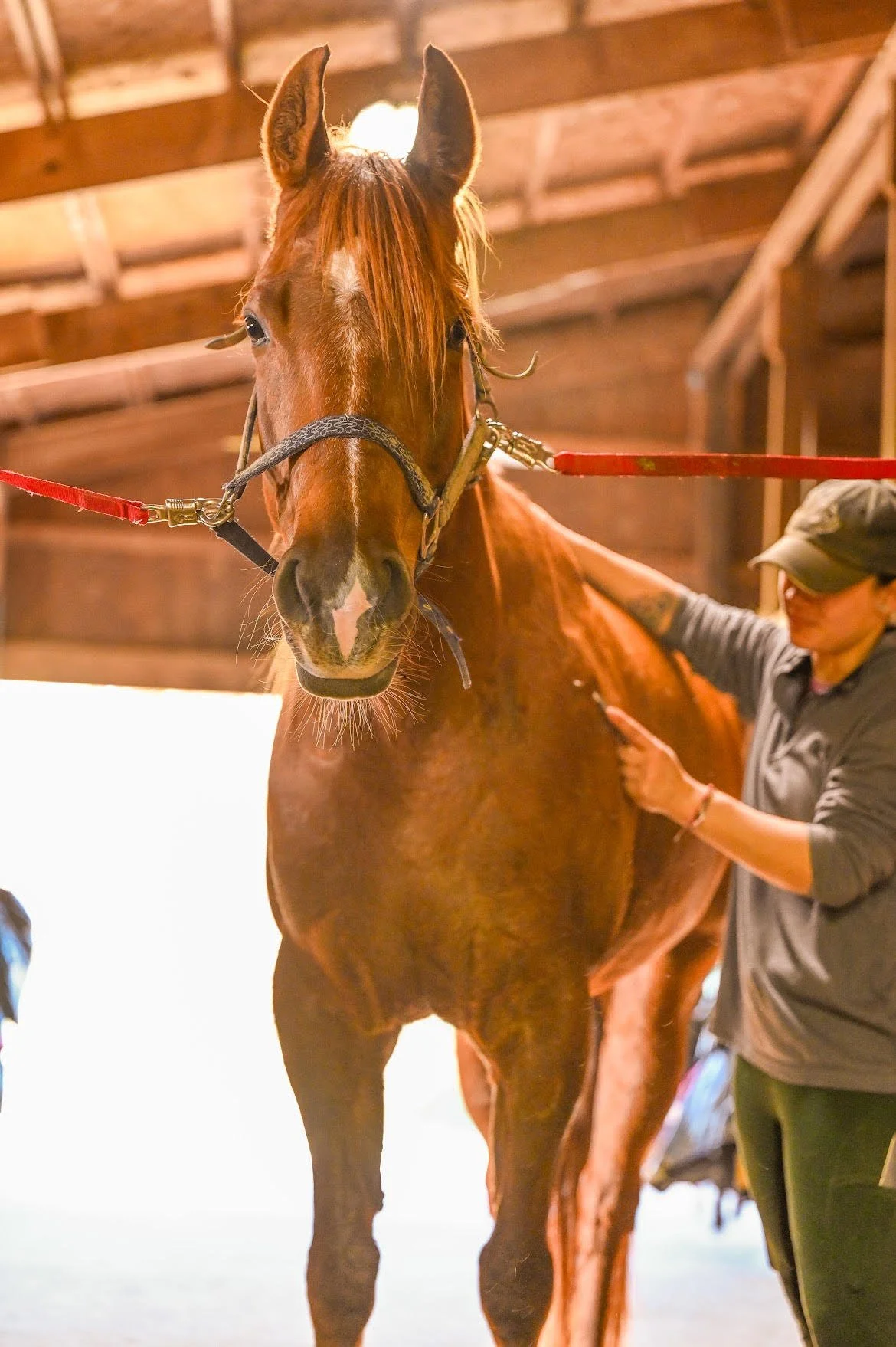
Tatiana: I pursued a bachelor’s degree in Biochemistry, although at the time, I wasn’t entirely sure where that path would lead me. I just knew I wanted to do something to help equines.
For a while, I considered becoming a chiropractor, but after learning more about the process and requirements, I realized it wasn’t quite the right fit. Then one day, I came across equine massage therapy and everything clicked. After researching it more deeply, I knew this was exactly what I wanted to do. I became certified in equine massage, kinesiology taping, and craniosacral therapy through Angel’s Animals LLC, founded by Dr. Angelique Barbara. I also became certified in the Graston Technique through Graston Technique LLC.
What I love most about this profession is that the learning never stops. There’s always more to explore, more to master, and more ways to grow. Continual education allows me to keep expanding my skill set and offer the very best care to every horse I work with.
What attracted you to creating your own business in equine massage and bodywork?
Tatiana: What really attracted me to creating my own business in equine massage and bodywork was the flexibility and the freedom to work at my own pace and in my own style. Equine bodywork is such a personalized field; there are so many different modalities, and no two practitioners have the exact same approach, experiences, or skill sets. Similarly, every horse is different, and their needs can vary widely. Starting my own business gave me the ability to tailor my sessions based on what each individual horse needs and what I uniquely bring to the table. It allows me to focus on the methods I’m most passionate about and most effective in, while building meaningful, trust-based relationships with both horses and their owners. That kind of personalized care is at the heart of why I do this work.
What is a typical day like for you?
Tatiana: A typical day for me varies depending on my schedule, but Monday through Thursday mornings, I spend time working alongside Dr. Stephanie Davis at the Virginia Rehabilitation and Performance Center. It’s been an incredible opportunity to deepen my understanding of rehabilitation and sports medicine, and it’s helped shape the way I approach my own bodywork sessions. After my time at VRC, I head out to work with my own clients, including some of my sponsored riders like Ema Klugman, Carlin Keefe, and Jaclyn Burke at Hablyn Hills. Each day looks a little different depending on how many sessions I’ve scheduled and whether or not I’m at the clinic, but every day is fulfilling. I feel really lucky to spend my time doing work that I’m passionate about and that makes a real difference in the lives of both horses and their people.
What are your day-to-day challenges?
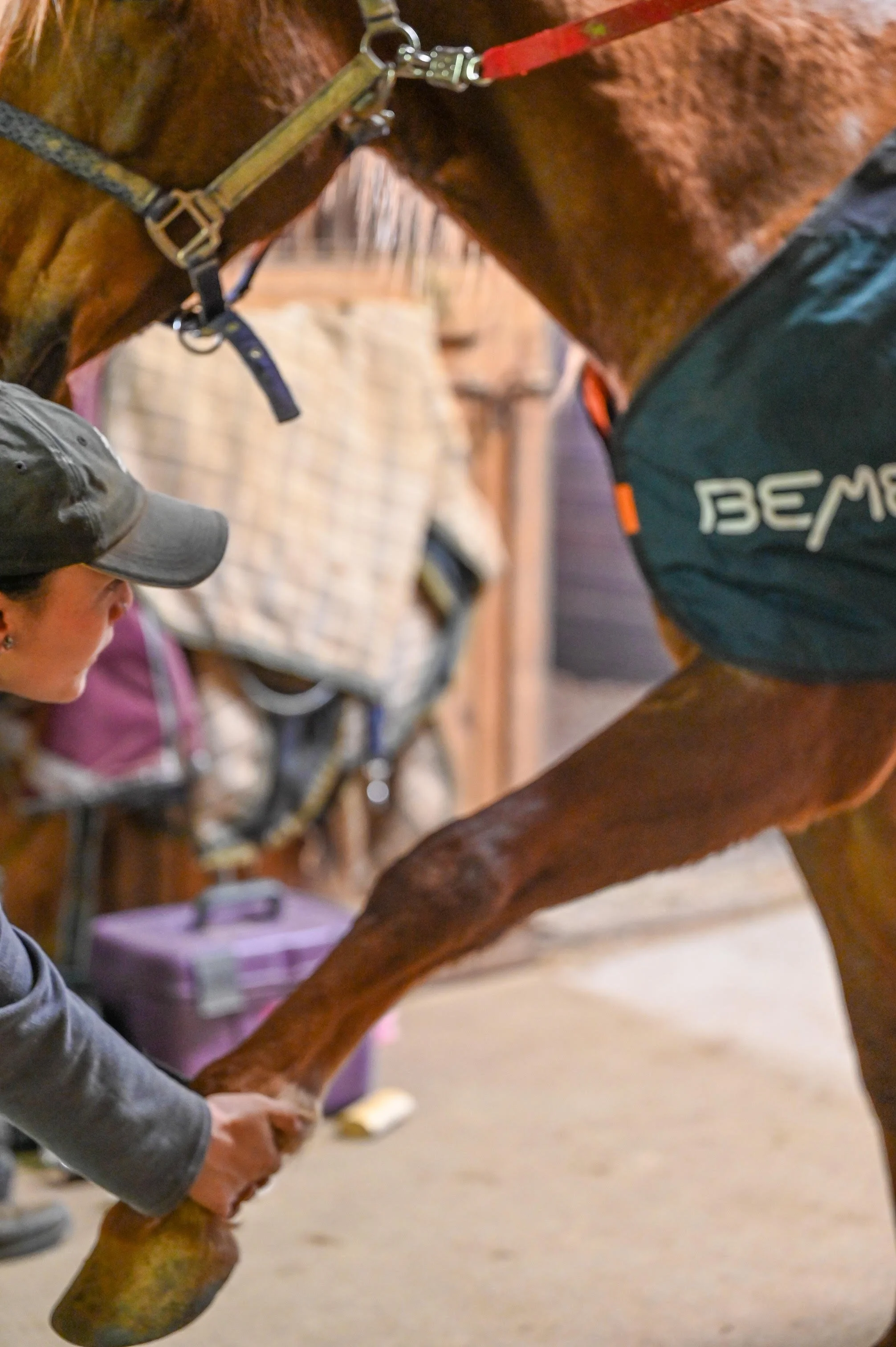
Tatiana: One of my day-to-day struggles is the process of figuring out what’s really going on in a horse’s body. Horses can’t tell us where it hurts or what feels off, so it requires a lot of observation, intuition, and patience to piece things together through subtle cues like behavior, posture, or movement patterns. Sometimes what presents as tension in one area is actually being caused by a deeper imbalance somewhere else, so it can be a puzzle.
Another challenge is that progress isn’t always linear. Some horses respond right away, while others take more time to build trust and show improvement. It keeps me on my toes, but I find that’s also what makes the work so rewarding.
Do you have short and/or long-term professional goals that you are comfortable sharing?
Tatiana: In the short term, one of my main goals is to become certified in canine massage so I can begin offering bodywork for dogs in addition to horses. I’m also planning to complete an osteopathy program for both equines and canines—there’s already a school that has really caught my interest. Another important short-term goal is to earn my NBCAAM certification, which I see as a key step in establishing a strong foundation for my practice. All of these steps are part of a bigger vision. My long-term goal is to open my own facility where I can offer specialized, holistic rehabilitation services for equines at all stages of life. I want to create a space where horses can heal, retrain, and thrive with a full-body approach to wellness and recovery. It’s something I’m deeply passionate about, and I’m excited for the journey ahead.
In your opinion, what skills are most valuable in your career?
Tatiana: In my opinion, one of the most valuable skills in my career is communication, both with people and with horses. On the human side, it’s important that I can clearly explain what I’m finding during a session in a way that builds trust and helps owners understand their horse’s needs. I also place a lot of value on listening. Many owners know their horses very well, so creating space for them to share observations makes my work more effective and collaborative. On the equine side, communication is more about sensitivity and intuition. Horses communicate through body language, movement, breath, and energy, so I need to stay tuned into those subtle cues to know what’s working and what’s not. I also use my own body language and energy to help the horse feel safe and relaxed, which is essential for effective bodywork. Whether I’m talking to an owner or working hands-on with a horse, clear and compassionate communication is at the heart of everything I do.
What types of classes/fields of study were most important or interesting to you for your specialization in equine massage?
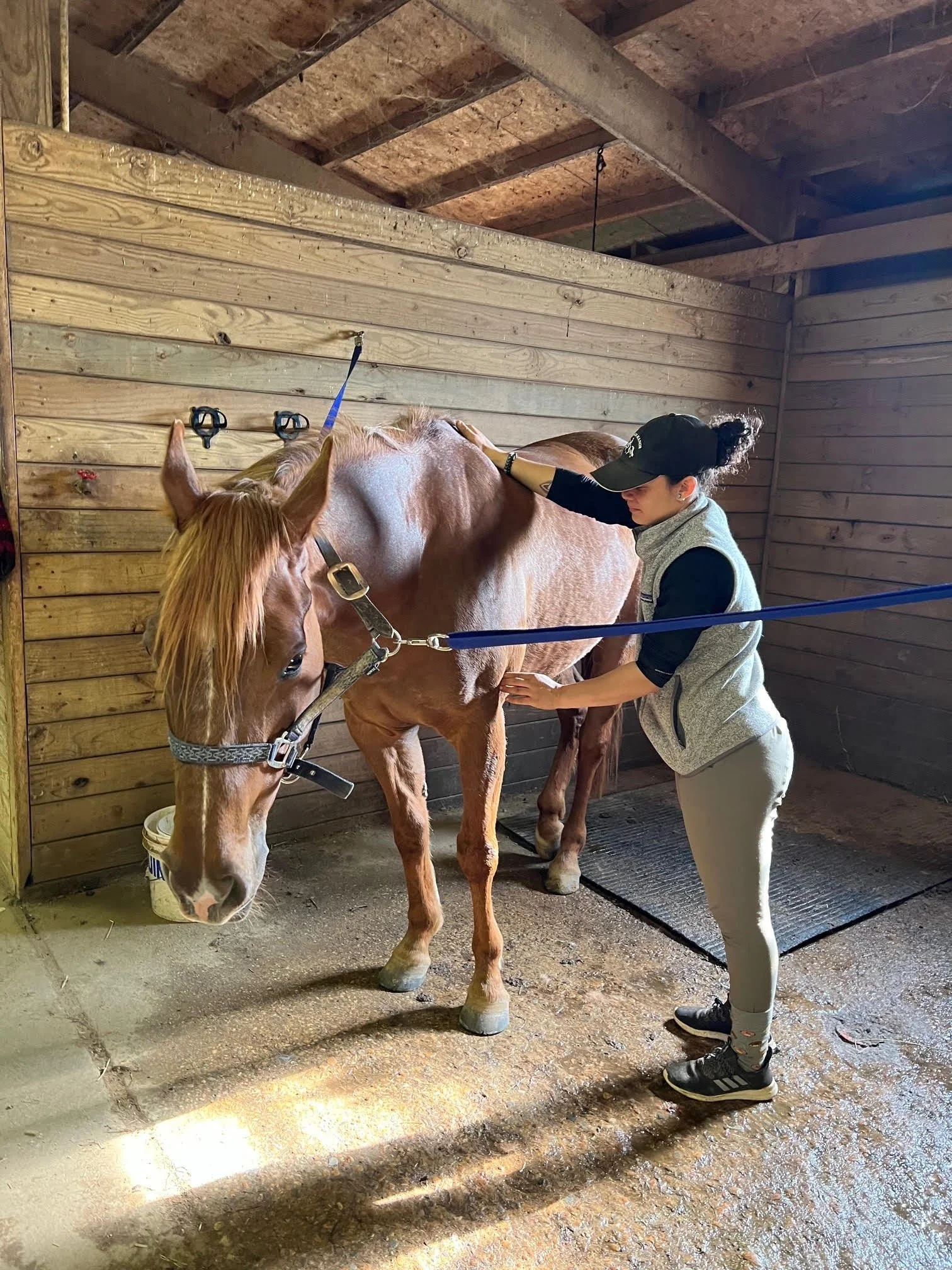
Tatiana: I believe that the most important and interesting areas of study have definitely been anatomy and biomechanics. As bodyworkers, our job is to work directly on the body, so if we don’t deeply understand the structure of the horse, including how every joint, muscle, and soft tissue system functions, then we’re missing the full picture of what’s going on beneath our hands. Understanding anatomy helps me pinpoint where tension is held, how that tension affects the rest of the body, and where compensation might be forming. Fascia and the concept of tensegrity are also essential parts of this because everything is connected, and changes in one area can affect balance and mobility elsewhere. Biomechanics is equally important. It helps me see how a horse is moving, how each part of the body functions both independently and together, and where things might be breaking down or adapting inefficiently. Together, anatomy and biomechanics give me the map and the movement patterns I need to assess and support each horse holistically.
Did you always know that you wanted to work in this field?
Tatiana: Yes, I’ve always known I wanted to do some form of bodywork. Watching our equine chiropractor work really shaped that desire. I remember being in awe of how responsive the horses were, both physically and emotionally, to her touch. It was clear that she was helping them feel better in a deep and lasting way, and that left a huge impression on me. I always knew I wanted to help animals, but I also knew that veterinary medicine wasn’t the right path for me. Then one day, I came across equine massage and everything clicked. Since then, my world has completely changed for the better. This work allows me to connect with and care for horses of all kinds, and I honestly can’t imagine doing anything else.
Do you have opportunities to work with other POC professionals?
Tatiana: I’ve had the opportunity to work with POC trainers and riders, but not many other professionals in different roles within the equestrian industry. I grew up in a community where there wasn’t much diversity—I was often the only Latin American rider at my barn, other than the grooms or stall cleaners. My family is from Puerto Rico, and that part of my heritage is incredibly important to me. It’s been exciting to see how much the show jumping scene is growing on the island, and how more Puerto Rican equestrians are stepping into the spotlight. I’ll never forget watching Lauren Billys Shady represent Puerto Rico in the 2020 Tokyo Olympics—seeing her power through the cross-country course was so inspiring. That moment helped me realize just how much of an impact visibility and representation can have in this sport and community.
Is there anything additional that you would like to share with a person of color interested in becoming an equine bodyworker? Or someone looking to start a career/side hustle in the equestrian industry?
Tatiana: Do your research! There are so many different paths you can take as an equine bodyworker, and a wide range of modalities you can offer to your clients. The best thing you can do is explore them, get familiar with the options, and then focus on what truly sparks your interest. The same goes for certification programs, each course is different in its approach, style, and philosophy, so take the time to find one that aligns with your goals and learning style. It’s also completely okay not to have a clear end goal when you start. Your journey will evolve, and everyone’s path in this industry looks a little different. What matters most is staying open to learning. No matter how long you’ve been doing this work, you’re never done growing. Shadow other professionals, take new courses when you can, and stay curious. Let your brain be a sponge and enjoy the ride.

The Professional Pathways Q&A series is sponsored by Mythic Landing Enterprises, LLC (MLE).
MLE is dedicated to helping businesses thrive with expert services in communications, marketing, business management, event planning, and more. Whether you're a small startup or managing a larger organization, MLE offers the tools and support to help your business succeed.
Strides for Equality Equestrians is always open to additional opportunities for equitable inclusion within all equestrian sports. If you’d like to be involved, get in touch with SEE by emailing stridesforequality@gmail.com.