
Professional Pathways Q&A with Dr. Aja Harvey
This Strides for Equality Equestrians: Professional Pathways interview, brought to you by Mythic Landing Enterprises, features Dr. Aja Harvey, DVM DACVIM, of B.W. Furlong & Associates.
Dr. Harvey is an internal medicine specialist based in Oldwick, New Jersey, where she manages a diverse caseload that includes neonatal foal care, infectious diseases of gastrointestinal or respiratory origin, neurologic disorders, and general cardiology. Dr. Harvey grew up in Somerset, NJ, graduated from Howard University and Tuskegee University, and has become one of the few Black equine veterinarians in the United States.
Helen Casteel, a member of SEE’s Leadership Team, sat down with Dr. Harvey for another installment of our Professional Pathways Q&A series to discuss her journey and the impact she’s making in the equestrian industry.
What is your job title and give a brief description of your primary responsibilities. What city/state do you live?
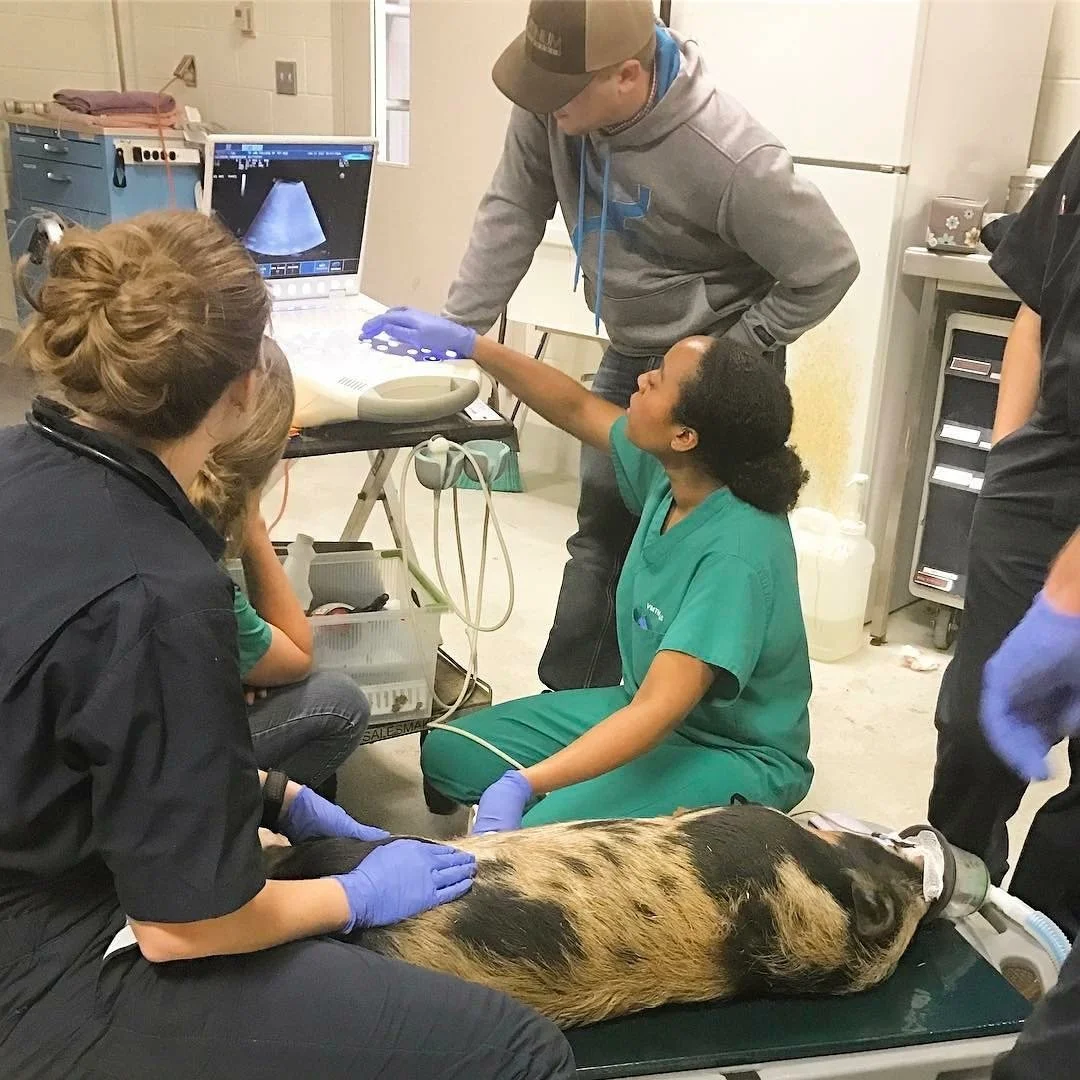
Dr. Harvey: I grew up locally in Somerset, New Jersey, and from a young age, I always knew that I wanted to become a veterinarian. I did not grow up with horses, but I regularly sought out any and all interactions I could have with them in and out of the veterinary setting.
I joined B.W. Furlong & Associates practice in 2020 as an associate veterinarian and one of two internal medicine specialists that operate out of the main clinic in Oldwick, New Jersey (the practice has satellite locations in Virginia and Florida). My primary responsibilities at my current practice include the triage, diagnosis, and management of a wide variety of cases in both the field and clinic setting - such as: neonatal foal care, infectious disease of gastrointestinal/respiratory origin, neurologic disorders, and general cardiology.
Over the past year, I have also taken on managing horses at the clinic-run performance horse rehabilitation center.
What is your educational background?
Dr. Harvey: I obtained my undergraduate degree in Biology from Howard University and my DVM degree from Tuskegee University. Tuskegee was a familiar place for me, as I spent many summers as a child visiting my grandmother and grandfather who served as Dean of the Tuskegee School of Nursing and pastor of the local church, respectively, for many years. After graduating, I went on to complete a rotating surgical and medicine internship at Louisiana State University. Afterwards, I was accepted to Texas A&M University as one of their large animal internal medicine residents. During my residency, I was exposed to dynamic internal medicine disorders in equines and ruminants, lameness, cardiology and ultrasound. Post residency, I worked at a high-volume ambulatory practice in Lexington, Kentucky where I gained experience in thoroughbred breeding, farm management and yearling sales.
What attracted you to being an equine veterinarian?
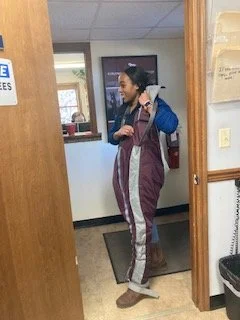
Dr. Harvey: I liked that equine veterinarians spent time outside. I have been able to see calls on some of the most beautiful farms and properties and it helps break the monotony of being inside a building all day. On top of that, I have always been inexplicably drawn to horses, so incorporating them into my goal of becoming a veterinarian felt like the most reasonable thing to do.
What is a typical day like for you?
Dr. Harvey: One of the great things about my schedule is the variety of cases I see on a daily basis. My day typically starts around 7 am when my interns check in with me about clinic patients, and I typically arrive to evaluate them sometime later. The remainder of my day is either filled with appointments, referrals, or assisting with ambulatory emergencies.
Emergency hospital duty does sometimes mean my day is thrown for a loop (especially when patients are referred for colic surgery in the middle of the night, as I am on hand to admit and determine if that step is necessary).
What are your day-to-day challenges?
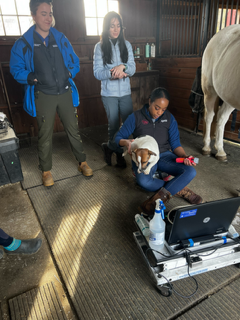
Dr. Harvey: I would say my biggest daily challenge is time management. On days when I have clinic patients and field evaluations to get to, I do find it can be hard to keep myself on track. Additionally, I have to squeeze in updating clients, consulting with other veterinarians on top of attending to emergencies; there are seemingly not enough hours in the day. Luckily, I have a personal technician who helps me with all of these tasks, which is crucial.
Do you have short and/or long-term professional goals that you are comfortable sharing?
Dr. Harvey: Long-term, I would like to continue to expand my knowledge and expertise in both internal medicine and rehabilitation (particularly ultrasound). A short-term goal for myself would be to stay more up to date on current research via journal articles. There are so many great papers, and I am always looking for ways to expand my knowledge and grow as a veterinarian.
In your opinion, what skills are most valuable for your career? Since you’re a DVM, medical proficiency is an obvious answer here, but have you found you’ve developed a skill set you didn’t anticipate you needed which has helped you to be successful?
Dr. Harvey: I believe that versatility and adaptability are two very important skills to have as a veterinarian. I know these are not tangible skills in the traditional sense, but they serve as conduits to obtain knowledge, medical experience, and effective communication skills. You can be the most technically savvy veterinarian in the world, but it amounts to very little if you are not able to communicate with staff, other veterinarians, and most importantly, owners. It is a skill that does not come naturally to all and is refined throughout the years. It also helps to keep an open mind to alternative ways to approach cases, particularly when they are on the difficult side.
What types of classes/fields of study were most important or interesting to you for your specialization in equine internal medicine?
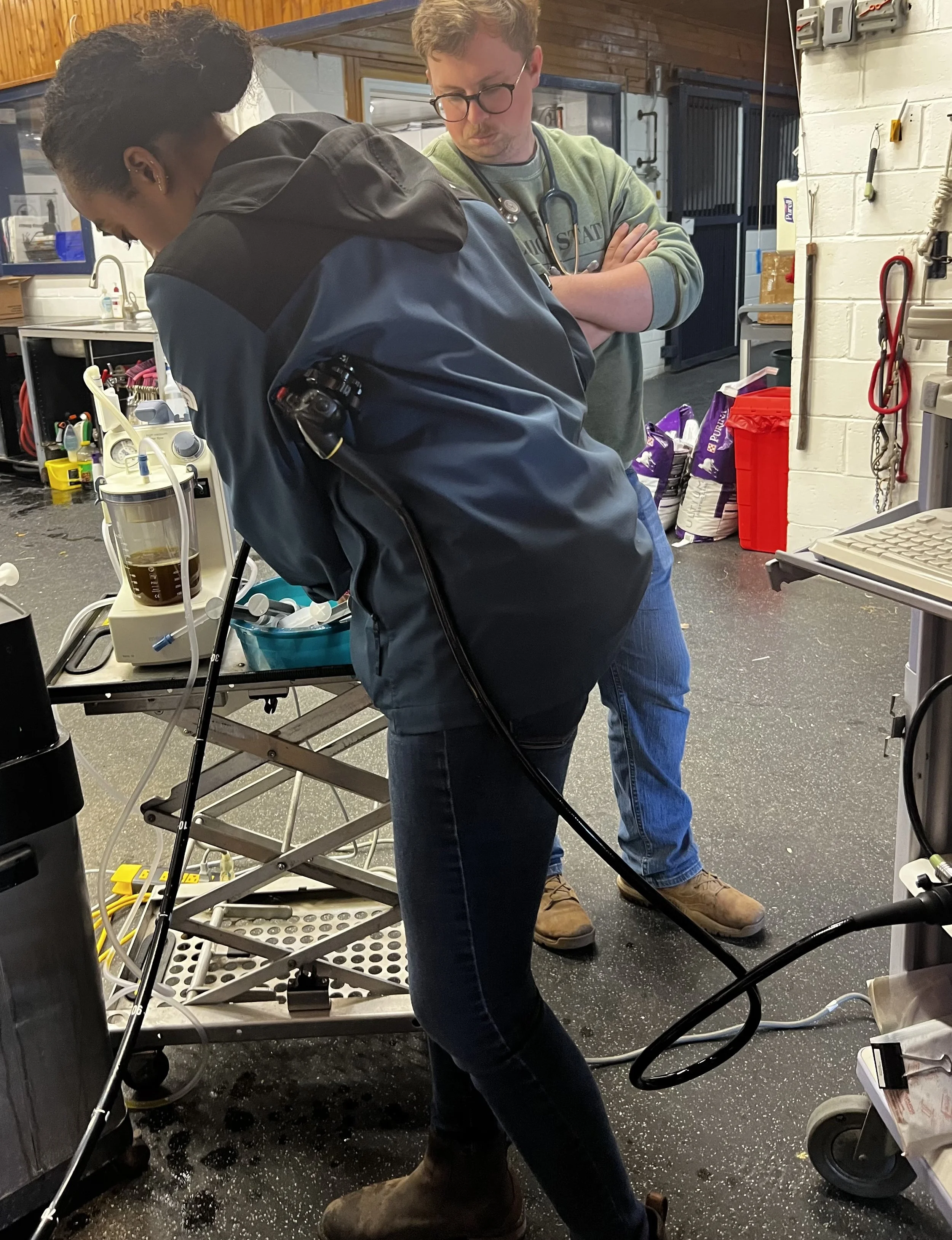
Dr. Harvey: Tuskegee University prepared me well for any field of veterinary medicine that they may want to pursue, due to a curriculum during my time there that required me to rotate through both large and small animal medicine. It was ironically enough on my small animal medicine rotation that I realized that I like medicine as a whole. The pathophysiology behind the diseases was the same and that is what drew me to internal medicine. A case was a puzzle that needed to be put together, using clues from history, physical examination and diagnostics.
As I made a conscious effort to apply to an equine specific internship program post-graduation, I made sure to make myself a competitive candidate by taking part in any and all large animal labs (equine, bovine and small ruminant), extracurricular activities and clubs that were available to me. That served me well later during my residency when I was responsible for evaluating food animal cases, along with equine.
Did you always know that you wanted to be an equine veterinarian?
Dr. Harvey: I always knew I wanted to be a veterinarian from a young age and I have always loved horses in films and literature, but the practical exposure to them did not come until I was in college. I shadowed a standardbred track veterinarian for a summer in New Jersey, and that was my first experience with horses in a professional capacity. After that experience, I made a point to continue to extern at equine practices, especially after entering veterinary school (ironically, B.W. Furlong & Associates was one of the practices that I externed with during my final year of veterinary school).
Do you have opportunities to work with other POC veterinarians or professionals?
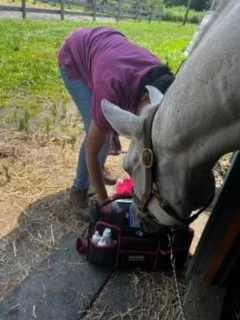
Dr. Harvey: Not surprisingly, there are not many other POC veterinarians in my field that I have regular contact with (there may be fewer than 10 total in the equine field that I know of - in the United States that is). However, in the past 2-3 years, I have been asked to participate in DEI programs and student associations that have put me in contact with veterinary students who wish to pursue a career in equine medicine. It is important for them to see representation in the equine field because it can be a potentially daunting task to even think about entering this space due to a lack of experience or familiarity with horses. I had the same concerns when I first started, but without any guidance or support from someone like myself who was actively practicing. I am happy that I am able to serve as a mentor to future vets who are considering equine practice as a career choice.
I am also a member of the National Association for Black Veterinarians and the Tuskegee University Alumni Association which are both excellent ways for me to connect with other Black veterinarians.
Is there anything additional that you would like to share with a person of color interested in being a veterinarian? Or even someone interested in a science/medicine-based career?
Dr. Harvey: I always advise students to reach out and experience as many externship or shadowing opportunities as they can. Being immersed in equine practice firsthand is the best way to determine if it is something that interests you. We work long hours and the work-life balance can be tricky to navigate, even for those of us that have been doing this a long time. Even if it is not what they end up pursuing in the end, just spending a day with an equine vet will make for a good conversation starter!

The Professional Pathways Q&A series is sponsored by Mythic Landing Enterprises, LLC (MLE).
MLE is dedicated to helping businesses thrive with expert services in communications, marketing, business management, event planning, and more. Whether you're a small startup or managing a larger organization, MLE offers the tools and support to help your business succeed.
Strides for Equality Equestrians is always open to additional opportunities for equitable inclusion within all equestrian sports. If you’d like to be involved, get in touch with SEE by emailing stridesforequality@gmail.com.